
Reflecting on the Transportation Funding Crisis: A Closer Look at the Gateway Tunnel Project
The recent announcement about the funding termination for the Gateway Tunnel project has sparked a robust debate over the future of not only a key piece of transportation infrastructure but also the economic vitality of the New York and New Jersey region. As federal decisions intersect with state ambitions and public needs, this discussion takes us deep into the tricky parts of political maneuvering, economic adjustment, and the long-term implications of such moves on everyday commuters and businesses alike.
In this opinion editorial, we’ll take a closer look at the decision, the conflicting priorities that underlie it, and the multifaceted impact on a region that depends on this critical infrastructure. We will also touch upon some equivalent challenges in the digital space, such as managing privacy settings in an increasingly data-driven world, drawing analogies to the importance of transparency and individual control in our public and private lives.
Political Motivations Behind Funding Terminations and Their Wider Impact
The announcement by President Trump to terminate funding for the Gateway Tunnel project was as unexpected as it was alarming. Critics argue that his decision reflects a personal vendetta rather than a measured public policy change, pointing out that even in politically charged times, choices with long-lasting impacts on everyday commuters and local economies should be driven by clear evidence and community benefits.
Senate Minority Leader Chuck Schumer’s reaction was swift, describing the move as “vindictive, reckless and foolish.” This strong language highlights the tension between political interests and public welfare. When politicians use their power to make decisions that affect infrastructure—decisions that directly impact hundreds of thousands of lives—the stakes become more than just political points; they translate into tangible, and sometimes overwhelming, challenges for communities.
Critics and supporters alike need to figure a path through the maze of political hints, personal histories, and local interests. The decision has ignited debates on whether political retribution should ever come at the cost of a project that millions rely on for safe, efficient transit between major economic hubs. Surely, in a democracy, policy decisions should be made based on the long-term benefits to society rather than short-term political gains.
Economic Consequences for Commuters and Local Businesses
Beyond the political theater, the real impact of the funding termination may be felt by the everyday commuter and local business owner. The Gateway Tunnel project was seen as an essential upgrade to an aging transportation network, one that had struggled with the challenges posed by events like Superstorm Sandy. The project’s delay or potential cancellation could lead to economic disruptions that may trickle down into several layers of the regional economy.
The potential economic issues include:
- Extended Commute Times: Without the expected improvements in infrastructure, commuters could continue to face long delays, making daily travel more nerve-racking.
- Increased Operational Costs: For businesses that depend on reliable transit, longer commute times can create a ripple effect on productivity, affecting overall profitability.
- Job Losses: Construction projects not only improve transportation but also generate thousands of union and middle-class jobs, and a delay could curtail these benefits.
- Economic Bottlenecks: Major transportation corridors like the Northeast Corridor may experience severe congestion, which in turn can deter investments and new business opportunities.
Experts like Carlo Scissura from the New York Building Congress stress that this program is key to driving economic activity across a region that represents nearly 20% of the United States GDP. Losing access to such a super important infrastructure project could see thousands of jobs lost and businesses struggling to survive a mounting crisis.
Federal vs. State Funding: A Tangled Web of Funding Sources
One of the most confusing bits about the Gateway Tunnel project lies in its reliance on multiple funding sources. With federal support now in question, state and local governments are forced to scramble for alternatives to keep the project moving forward despite the president’s decision.
This scenario sheds light on the delicate balance between federal and state resources. While federal funding was seen as the backbone of the project, it is clear that state and local financing might step in temporarily. However, the long-term picture remains uncertain if federal support continues to be off course.
Below is a table summarizing some of the pros and cons of the existing funding model:
| Funding Source | Advantages | Challenges |
|---|---|---|
| Federal Funding |
|
|
| State and Local Funding |
|
|
This table illustrates the tangled issues that decision-makers must consider when steering through complex funding structures. While local financing may help weather the immediate storm, the absence of federal backing might lead to significant delays and further economic instability in the long run.
Impact on Infrastructure and the Northeast Corridor: An Economic Lifeline in Jeopardy
The Gateway Tunnel project is more than just a construction venture—it represents a life raft for a region bustling with transit activity. Designed to replace and expand the current rail tunnels for Amtrak and NJ Transit (which have been compromised in past catastrophic events), the project’s potential cancellation or continued postponement has profound implications.
This major infrastructure project plays a crucial role in maintaining an effective transportation network along the Northeast Corridor, a route connecting several of America’s busiest metropolitan areas. Without it, there is a real risk of increasing traffic congestion not only within urban environments, but also along the broader intercity travel corridors that are integral to the nation’s economy.
Some of the anticipated negative impacts include:
- Reduced Efficiency: Aging tunnels might lead to slower train speeds and more frequent delays which could result in lost hours for workers and businesses alike.
- Safety Hazards: Continued use of deteriorating infrastructure increases the risk of accidents and other safety issues for millions of daily commuters.
- Economic Slowdowns: With the possibility of bottlenecks and service interruptions, the local and national economies could face slower growth due to impaired transportation efficiency.
The economic lifeline provided by the Gateway Tunnel extends beyond the immediate region, affecting national trade, commerce, and the seamless interconnection between major economic centers. As such, any decision that jeopardizes the project’s continuity holds the potential for far-reaching consequences.
Lessons from Past Funding Crises and the Future of Major Infrastructure Projects
This isn’t the first time a major infrastructure project has faced troubled waters due to shifting political priorities and funding complications. History is replete with examples where projects have stalled or been downgraded because state and federal collaboration fell apart at key moments. These instances are packed with fine points that offer valuable lessons for the future.
Looking back, we see that projects with multiple funding streams often attract layers of complicated pieces. These financial frameworks—although promising when combined—are highly sensitive to the political and economic environment. When one major source is abruptly removed, as is happening with federal support in this case, the remaining stakeholders are left to sort through the remaining budget and reconfigure plans.
Key takeaways from earlier funding crises include:
- Proactive Risk Management: Early planning for possible funding gaps can mitigate the shock of a sudden withdrawal.
- Diversified Financial Streamlining: Relying on a more balanced mix of funding sources from the start may offer greater resilience.
- Transparent Communication: Keeping stakeholders and the public informed helps maintain trust even when decisions are subject to change.
These lessons underline that major transportation projects require not only robust financial backing but also a strategy that can adapt to political and economic shifts. Without such flexibility, moves like the sudden termination of federal support risk creating long-term issues that ripple across the funding ecosystem.
Getting Around Complicated Data Privacy Practices in Today’s Digital Age
Interestingly, while the discussion about massive infrastructure projects occupies headlines, another domain has seen equally significant transformations: data privacy settings on digital platforms. Just as the public grapples with the shifts in funding for critical infrastructure, users today must manage complicated pieces of privacy settings that affect how their personal information is shared online.
Many websites and apps now offer users the ability to review and manage privacy settings, allowing for a more personalized browsing experience. This system of data management stands in contrast to the top-down decisions made in large-scale government projects, yet it shares common elements such as transparency, control, and accountability.
For example, consider the following similarities:
- Authority vs. Autonomy: Just as local and federal governments have the authority to make funding decisions for infrastructure, digital platforms hold the reins when it comes to collecting data. Both wield significant power that affects end users.
- Transparency: The complexity of both systems requires clear communication. In infrastructure funding disputes and online privacy policies alike, constituents and users benefit from understanding the decisions made on their behalf.
- Resilience in the Face of Change: Whether navigating the twists and turns of political decisions or figuring out how to tweak privacy settings, both scenarios call for flexibility and robust risk management.
In many ways, managing your digital privacy is a microcosm of larger public policy issues—both need careful thought, clear communication, and a willingness to adapt when circumstances change. As we continue to see significant shifts, whether in highways and tunnels or in digital information flows, the need for user and citizen empowerment remains a constant.
Balancing Political Influence and the Greater Public Good
At the heart of the current debate is the need to balance political influence against the overall benefit to the public. The Gateway Tunnel project was always intended to be more than a mere construction job—it was a super important investment in the region’s economic future, promising to unlock potential and alleviate longstanding transit issues.
Decision-makers are now being called upon to find their way through a maze of personal politics, government mandates, and economic imperatives. When political forces try to meddle with projects that affect millions, one must ask: is it really acceptable to let personal vendettas override the collective good?
This sentiment is echoed by commuters and local residents who see the project as essential for their daily lives. Joe Krall, a New York City commuter, captured the feeling of many when he stated that politics should not be about retribution. The sentiment is clear: New York and New Jersey, like the rest of America, deserve decisions that reflect a commitment to growth, safety, and opportunity—not political gamesmanship.
It’s a delicate balancing act: while elected officials are under immense pressure to represent their ideologies and constituencies, public infrastructure decisions must always be weighed against the tangible benefits they bring to society. If we allow political maneuvering to dictate these critical choices, we risk not only stifling economic progress but also undermining trust in the institutions meant to serve us.
Sticky Points in the Implementation and Future of Major Transportation Projects
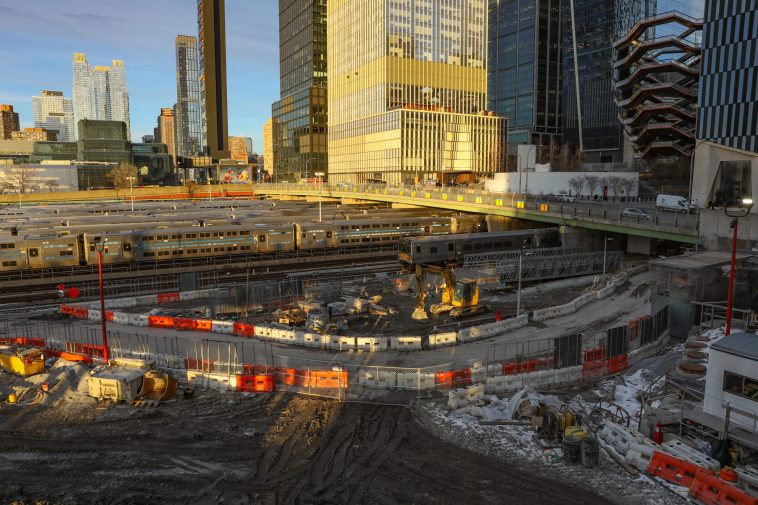
As construction crews continue work at Hudson Yards and other critical sites, the immediate focus is on the physical progress of the project. However, beneath the surface lies a series of sticky points that could jeopardize not only the timely completion of the Gateway Tunnel but also larger efforts to revamp the nation’s infrastructure.
The following are some of the subtle details and little twists that must be considered:
- Coordination Among Multiple Agencies: The project cuts across federal, state, and local jurisdictions. Aligning these different perspectives is a nerve-racking process that requires clear communication, coordinated planning, and mutual support.
- Long-Term Economic Projections: Predicting the impact on regional economies is riddled with challenges. Analysts must factor in everything from job creation to the indirect economic boost of increased mobility.
- Community Impact and Accountability: Local residents and commuters have legitimate concerns about increased congestion, safety hazards, and disrupted daily routines. Their voices provide invaluable insight into the hidden complexities of such large-scale projects.
- Dependence on Favorable Political Winds: Perhaps one of the most troubling aspects is the reliance on political goodwill. With political climates shifting rapidly, long-term projects can easily be caught in the crossfire of partisan conflicts.
The current stance, wherein federal funding might be delayed or replaced by state financing, poses a challenge in itself. While it might offer a temporary solution, the broader uncertainty inevitably complicates planning and may even stymie additional investments in related infrastructure. Without a clear and stable financial pathway, future projects of similar scale may find themselves facing the same nerve-racking delays.
Future Prospects: Planning Amid Political and Funding Shifts
Looking ahead, it is essential to consider effective strategies that can help mitigate the risks posed by abrupt political and funding changes. There is a pressing need for resilience in planning—a proactive approach that ensures even if one funding stream dries up, the project can continue to make progress.
A multifaceted strategy for sustaining major infrastructure projects could include:
- Diversification of Funding Sources: Avoid over-reliance on a single funding stream by involving private investors, local bonds, and even public-private partnerships.
- Flexible Project Timelines: Build contingency periods into project schedules that can accommodate delays due to political or economic uncertainties.
- Robust Risk Management: Develop plans that anticipate potential funding drops, enabling authorities to take preemptive measures before a crisis emerges.
- Community and Stakeholder Engagement: Regular dialogues with local communities can help build public support and generate the kind of widespread pressure that may encourage policymakers to re-evaluate abrupt decisions.
Such steps not only help mitigate immediate issues but also set a precedent that infrastructure investments are too important to become pawns in political power struggles. The broader lesson here is that future projects must be built on a foundation of flexibility, transparency, and above all, a commitment to long-term public welfare.
Parallels in Today’s Digital Policy: Managing Transparency and User Choice
Just as infrastructure projects face obstacles from shifting political winds, digital platforms have their own set of challenges related to transparency and user control. Many websites now prompt users to review and manage their privacy settings to ensure a tailored digital experience while still heeding concerns over data collection.
This requirement to occasionally “manage your settings” mirrors how citizens are often forced to adjust to changes made by top-level decision-makers. Whether it’s controlling personal data on a personal device or ensuring the continuity of a critical public project, both scenarios require one to get into the details and figure a path through a maze of regulations and policies.
The parallels include:
- Informed Consent: Just as users are prompted to consent to data practices, taxpayers and voters must be informed about where and how their funds are being allocated for public projects.
- Customization vs. Uniformity: While digital platforms allow for personal customization, public infrastructure projects must meet uniform standards that benefit the broader community. Both require a balance between individual preferences and general welfare.
- Responsiveness to Feedback: Changes in digital privacy settings are often adjusted based on user feedback. Similarly, infrastructure projects need to remain responsive to community needs and economic realities to maintain public trust.
In a world where the digital and physical realms intersect more than ever, the need for user empowerment and transparent governance has become a common thread. As we adapt to evolving technological landscapes, we must remember that whether we’re dealing with data privacy or public infrastructure, the underlying aim remains the same: to create systems that serve us all effectively and equitably.
Charting a Course Through Political Uncertainty
The current impasse surrounding the Gateway Tunnel project is a vivid reminder of how political decisions can sometimes derail efforts that have been years in the making. While President Trump’s remarks have cast a shadow over the future of the project, it is imperative for policymakers, community leaders, and business owners to work together in finding solutions that bypass punitive politics and focus on collective benefits.
A few key recommendations for charting a course through this political uncertainty include:
- Establishing Clear Criteria for Project Continuation: Decision-makers should develop transparent benchmarks that can help determine whether a project should proceed independent of shifting political winds.
- Securing Multi-Year Commitments: To reduce the risk of funding cuts, long-term financial agreements with multiple layers of government involvement can help protect such projects from sudden termination.
- Leveraging Community Pressure: When citizens and local stakeholders unite, they can compel elected officials to prioritize public good over political squabbles.
These recommendations are not just theoretical ideas—they are practical strategies that have worked in other areas of public policy. They highlight the strength of a unified community response when faced with intimidating political decisions. The current scenario calls for a similar concerted effort from all those who stand to lose if this project fails to deliver on its promise.
Finding Your Path Through Confusing Bits of Bureaucracy and Politics
Every major public project is subject to its share of twists and turns. The Gateway Tunnel project has long been a symbol of hope for addressing the region’s congested transit system. Yet, hidden within a web of political signaling and funding negotiations are several subtle details that have now come under the microscope.
For instance, federal decisions that might seem offhand or politically motivated at first glance have the potential to cascade into a series of negative outcomes, including:
- Delays in project timelines that disrupt local planning
- Increased costs as financiers scramble for alternative funding
- Loss of public trust in institutions meant to prioritize community needs
These are not just abstract considerations—each aspect translates into real-world consequences for commuters, local businesses, and the broader economic ecosystem. When funding is pulled, not only do the immediate construction schedules suffer, but the longer-term benefits envisioned from improved connectivity and enhanced safety become even more remote. In essence, the very foundation of efficient public transportation and economic growth faces additional strain.
Conclusion: The Critical Need for Stable, Transparent Infrastructure Governance
The Gateway Tunnel project stands at a crossroads where political decisions, economic benefits, and public welfare intersect. The shocking decision to potentially terminate federal funding sends ripples of uncertainty far beyond the construction sites at Hudson Yards and 12th Avenue. It calls into question the reliability of long-term planning when political strategies and personal vendettas take precedence over sound, community-focused investments.
Just as individuals today are encouraged to regularly manage their privacy settings to maintain control over their digital lives, so too must we demand transparency and accountability in public infrastructure projects. Our economy, our safety, and our way of life depend on it.
As we move forward, it will be essential for all stakeholders—government officials, community leaders, business investors, and citizens—to work together in sorting out the challenges that lie ahead. By embracing proactive measures, diversified funding sources, and clear lines of communication, the risks posed by politically charged decisions can be mitigated. The goal should always be to secure an economic future that benefits everyone, rather than leaving essential projects vulnerable to the whims of political retribution.
In the final analysis, the debate surrounding the Gateway Tunnel project is a microcosm of larger challenges in governance today. Whether it’s managing the subtle details of a multi-billion-dollar infrastructure project or the complicated pieces of online privacy policies, a common theme emerges: the need for stable, transparent, and forward-thinking approaches that place the public interest above all else. Now is the time to take a closer look at how we can build resilient systems—both physical and digital—that are capable of withstanding political headwinds and ensuring a prosperous, connected future for all.
Originally Post From https://www.cbsnews.com/newyork/news/gateway-project-continues-president-trump-funding-threat/
Read more about this topic at
Trump Says $16 Billion Hudson River Tunnel Project Is ‘ …
Trump boasts that the $16 billion Amtrak Gateway Project …

