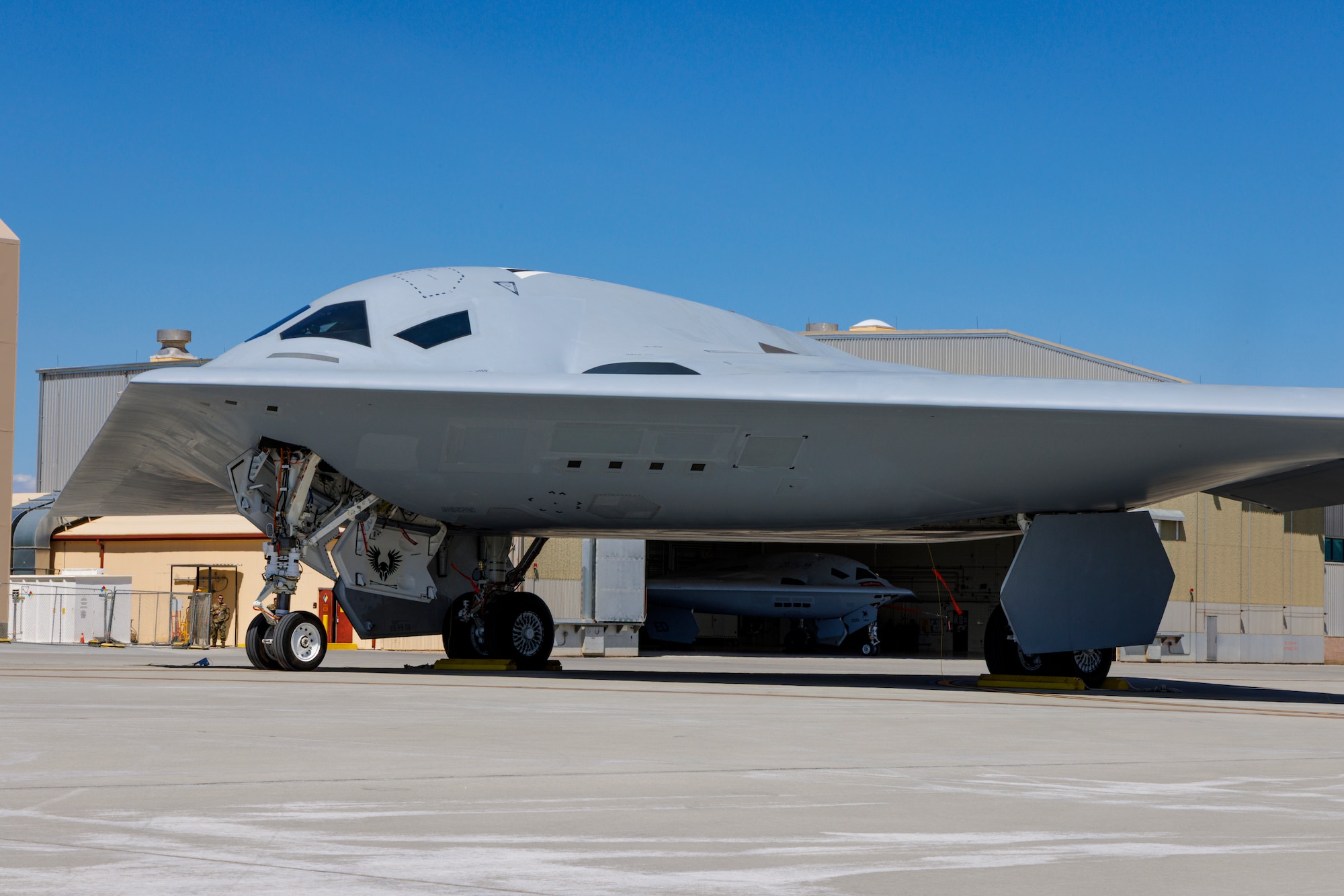
B-21 Raider: Shaping the Future of Strategic Airpower
The recent arrival of the second B-21 Raider at Edwards Air Force Base marks a turning point in the United States’ approach to long-range strategic strikes. As the centerpiece of a future bomber strategy, the B-21 Raider is designed to operate in environments loaded with advanced threats, delivering both conventional and nuclear payloads while countering some of the most intimidating enemy defenses. In this opinion editorial, we take a closer look at the aircraft’s development, testing milestones, and what its progress means for national security, industrial manufacturing, and broader economic implications.
Over the years, the U.S. Air Force has continuously worked through tricky parts and tangled issues to maintain a credible deterrent. With the onslaught of rapidly evolving adversary technology, the new stealth bomber must not only address the fine points of mission versatility but also ensure sustainability and adaptability for decades to come.
Strategic Impact on National Security and Modern Warfare
The B-21 Raider’s dual-capable design presents a unique solution in an era where strategic superiority is fundamental. By being capable of delivering both conventional and nuclear munitions, the aircraft exemplifies a blend of technological innovation and military pragmatism. This advanced system is engineered to make its way through highly contested skies and engage targets with pinpoint precision, even while evading enemy air defenses loaded with issues.
Air Force leaders have been quick to emphasize the urgency of accelerating flight testing and data collection. The integration of more test assets speeds up the collection of valuable performance information, which in turn shapes operational tactics in future battle scenarios. By bringing additional assets into the test environment, the Department of Defense is effectively streamlining the process of merging the aircraft’s digital architecture with its advanced sensor fusion capabilities.
This new technological leap is not only about achieving strategic deterrence but also about maintaining a competitive advantage in the modern theater of warfare. With adversaries constantly developing methods to counter stealth technology, the need to stay ahead with dynamic, upgradeable systems has never been more essential.
Advanced Design Features and Sustainable Upgrades
The engineering behind the B-21 Raider is as impressive as it is innovative. Designed by Northrop Grumman, the bomber incorporates an open architecture that allows for easier upgrades and maintenance—a key factor in ensuring longevity and relevance. This modular design means that as threats evolve and new technologies emerge, the Raider can adapt without the need for complete redesigns of its systems.
This sustainability aspect is critical in a modern defense ecosystem. Rather than falling victim to the overwhelming cycle of constant replacement, the B-21’s design philosophy is centered around upgradeability. This approach addresses the subtle parts of technological advancement and military readiness by allowing future mission systems and weapon integrations to slot in seamlessly. It is a solution that promises to figure a path through the maze of emerging defense technologies.
Another compelling aspect of this design is the aircraft’s emphasis on environmental sustainability and logistical efficiency. By leveraging open architecture systems, maintainers from the 912th Aircraft Maintenance Squadron are already getting hands-on experience, preparing to support a fleet that will serve as a backbone to the future Air Force. The ability to quickly adapt to new requirements is a super important operational advantage, especially as tactical requirements and mission-specific challenges continue to evolve.
Testing and Integration: Accelerating the Path to Operational Readiness
The commissioning of another test aircraft at Edwards Air Force Base highlights the accelerated pace of flight testing and evaluation. This additional asset means that mission systems—including sensor fusion, digital integration, and weapons delivery—are being evaluated under real-world conditions rather than in a controlled laboratory setting alone.
Air Force Secretary Troy Meink mentioned on X that with two B-21s in flight, the testing campaign is picking up momentum. General David Allvin, Chief of Staff of the Air Force, reiterated that this expanded test fleet shortens the time needed to bring the Raider into active service. The extra aircraft helps work through the many small distinctions and subtle details that define modern stealth and penetrating strike technologies.
- Real-time performance analytics
- Enhanced weapons integration tests
- Robust evaluations of digital architecture
- Mission system validation under simulated combat
As noted by defense experts, the thorough testing process helps clear up the nerve-racking and overwhelming uncertainties associated with large-scale technological deployments. The accelerated progress in flight testing showcases the U.S. Air Force’s commitment to fielding a bomber that is not only effective in a theoretical sense but has been rigorously vetted against the real-world challenges that modern warfare presents.
Building the Industrial Backbone: Economic and Manufacturing Implications
The B-21 Raider program is more than just a military initiative—it is also a significant economic undertaking that ties together high-tech manufacturing, industrial partnerships, and job creation across the country. As the U.S. moves toward replacing legacy aircraft like the B-1 Lancer and B-2 Spirit, the industrial implications are manifold, impacting supply chains, local communities, and technological innovation hubs nationwide.
Northrop Grumman’s leadership in developing the aircraft has required close collaboration with numerous subcontractors and smaller firms that provide essential components and support services. This industrial ecosystem benefits from the trickier parts involved in coordinating supply chains, managing quality control, and handling the tangled issues that arise from integrating cutting-edge technology into a single platform.
The following table highlights some key sectors that are expected to see economic benefits as the B-21 Raider program ramps up:
| Sector | Expected Impact |
|---|---|
| Aerospace Manufacturing | Increased production volumes and new technology integration |
| Defense Engineering | Advanced R&D in stealth and sensor fusion technologies |
| Supply Chain Logistics | Creation of new jobs and expansion of infrastructure networks |
| Maintenance and Upgrades | Development of training programs and heightened focus on sustainability |
As military projects often spur innovation in the broader economy, the B-21 Raider’s progression is likely to create a positive ripple effect. Small businesses, in particular, that focus on high-tech components and specialized manufacturing, stand to benefit substantially from the ripple effects of such a major defense contract. These developments can provide a boost to local economies, stimulate advanced research efforts, and even open up international collaboration opportunities in defense manufacturing.
Furthermore, the program’s commitment to open architecture not only enables rapid technological upgrades but also fosters competitive opportunities for smaller, agile firms. These companies—often nimble enough to work through the fine points of quick-turn development—can leverage their niche expertise to contribute to novel solutions, ensuring that the B-21 Raider remains on the cutting edge of aeronautical innovation.
Aligning Modernization Efforts with Future Threats
Modernizing the U.S. military capability is about more than just replacing aging aircraft; it is about positioning the nation for future strategic challenges. The B-21 Raider is designed to operate in tomorrow’s high-threat environment by incorporating state-of-the-art sensor fusion, digital systems, and integrated weapons delivery. This expansive suite of technologies ensures that the aircraft can adapt to changes in both combat scenarios and technological landscapes.
Officials have made it clear that addressing the overwhelming pace of technological change is a key priority. As adversaries introduce new, nerve-racking countermeasures, the B-21 must be capable of adjusting with minimal friction. Its design is meant to steer through the twists and turns of evolving threats, ensuring that agents in the field are equipped with an aircraft that can counter both conventional and nuclear challenges.
In a defense environment filled with subtle details and little twists that can significantly alter operational circumstances, the ability to upgrade and adapt is more than just an advantage—it’s a necessity. The inherent flexibility built into the B-21 Raider’s design is a calculated response to the mixed realities of modern warfare, where even small distinctions can have super important strategic implications.
Implications for Global Defense Policy and Military Posturing
Beyond the technical feats and economic prospects, the B-21 Raider has significant implications for global defense policy. As international geopolitical landscapes continue to evolve, the introduction of a new era of stealth bombers serves as both a deterrent and an indicator of military resolve. The Raider’s advanced capabilities signal to adversaries that the U.S. is committed to maintaining a formidable presence in contested regions, thus acting as a strong counterbalance to emerging military technologies worldwide.
Furthermore, by integrating aspects like unmanned operations and electronic warfare into its design blueprint, the B-21 Raider is positioned to influence how future combat and deterrence strategies are formulated. This shift is critical for policymakers and defense strategists, who must work through the subtle parts of aligning military technology with broader diplomatic goals. The aircraft’s ability to process electromagnetic data and to efficiently interface with a network of intelligence, surveillance, and reconnaissance systems makes it a key element of integrated defense strategies.
- Enhanced deterrence through advanced technological capabilities
- Improved credibility in international negotiations
- Strengthening alliances with partner nations through shared innovation
- Encouraging strategic stability by reinforcing a modernized defense posture
International observers have noted that the Raider’s progress is not happening in isolation. Instead, it is embedded within a global race towards modern warfare where technological superiority plays a super important role. As nations continue to modernize their own defense industries, the U.S. moves forward with a blend of practical innovation and forward-thinking policy—a testament to the ongoing evolution in military posturing.
Economic Spillover Effects in a Modernized Defense Industry
Modern defense projects like the B-21 Raider often produce economic spillover effects that reach well beyond the military sector. The integration of advanced digital systems and open architecture in this program has spurred growth in several adjoining industries, including software development, cybersecurity, and precision manufacturing. These benefits extend to local economies as subcontractors and component manufacturers experience expanded business opportunities and job growth.
Beyond direct economic impacts, the Raider program also drives innovation in areas that are crucial for future defense projects. By taking advantage of the open systems built into the aircraft, companies and research institutions across the country can more easily develop and refine new technologies. This environment of collaboration means that once nerve-racking and intimidating technical challenges can be tackled in a more dynamic and flexible business atmosphere.
Here are some of the economic benefits that are emerging from this advanced defense initiative:
- Job creation in high-tech manufacturing sectors
- Increased investment in local and regional R&D projects
- Enhanced competitiveness of U.S. firms in the global market
- Strengthened supply chains through improved logistical coordination
Such economic spillovers are essential for ensuring that the broader defense industrial base remains vibrant and responsive to future challenges. By fostering innovation and supporting small businesses through high-tech contracts, the program underlines the interconnectedness of military modernization and economic health.
Operational Flexibility and Future Mission Profiles
An element that sets the B-21 Raider apart from its predecessors is its operational flexibility. Designed to support both manned and unmanned operations, the aircraft can adapt to varying mission profiles as required by evolving combat scenarios. This capability is especially critical in environments where traditional manned missions might be too risky or impractical due to the presence of advanced enemy systems.
This dual-mode operation ensures that the airplane is not locked into a single tactical application. Instead, it is engineered to be reconfigurable—a quality that can make all the difference in modern warfare scenarios that are full of problems and intense pressure. Operators can choose between direct-attack munitions and more stand-off weapon systems, ensuring that the aircraft’s role on the battlefield remains flexible and responsive to real-time threats.
The decision to engineer such future-proof adaptability is driven by the recognition that modern military operations are often riddled with tension and unexpected twists. By planning for a variety of mission scenarios, defense strategists have worked through the complicated pieces of operational planning and have crafted a solution that provides a range of options for the warfighter.
Key features of the aircraft’s operational flexibility include:
- Compatibility with both conventional and nuclear payloads
- Seamless integration for unmanned operations
- Advanced network-centric warfare capabilities
- Built-in systems for rapid reconfiguration in response to dynamic threats
Managing Your Way Through Technological Shifts and Military Modernization
In today’s fast-paced defense landscape, working through the considerable logarithms of tech upgrades and operational shifts is on everyone’s mind. For the B-21 Raider program, the challenge does not solely lie in developing a state-of-the-art bomber; it also encompasses managing your way through the ever-changing field of military technology. The aircraft’s digital backbone, integrated sensor systems, and adaptive software modules are designed to accommodate rapid changes without substantial overhauls.
The program’s open-architecture approach provides a clear roadmap for managing purported technical shifts in the near future. This forward-thinking framework means that as new technologies emerge—be it in artificial intelligence, data analytics, or cyber resilience—such advancements can be integrated with relative ease. For military operators and engineers, this capability is not just an added convenience; it is an essential part of staying ahead in a competitive and often intimidating defense arena.
The need to tackle small distinctions and subtle details in advanced warfare scenarios places enormous pressure on designers and policymakers. With an adaptive design philosophy, the B-21 Raider is poised to counter the overwhelming pace of technological change, making it a cornerstone of future military modernization efforts.
Implications for Air Force Modernization and Global Deterrence
The integration of the B-21 Raider into the operational fleet signals a significant milestone in the ongoing modernization of the U.S. Air Force. With the aircraft’s ability to work through the tangled issues of both conventional and nuclear delivery systems, its presence fundamentally reshapes the strategic landscape for nuclear deterrence and conventional strikes. Such a capability not only enhances the credibility of the deterrence posture but also reinforces the message that America is committed to staying at the cutting edge of military technology.
By replacing and eventually phasing out older platforms like the B-1 Lancer, B-2 Spirit, and even supplementing the B-52 Stratofortress, the B-21 reinforces the Air Force’s modernization efforts. In doing so, it cements its role as a central player in the evolving landscape of airpower—a landscape where the ability to adapt, upgrade, and respond to fresh threats is more essential than ever.
Global strategic stability now hinges on the ability of modern air forces to project power, deter adversaries, and provide rapid responses to emerging crises. The B-21 Raider’s integration into the future bomber force embodies these objectives by offering unmatched combat power while ensuring that technological edge and operational readiness remain continuously in focus. In a world where rival powers are constantly upgrading their arsenals, the Raider’s existence is a clear signal that the United States is not prepared to be outpaced.
Looking Ahead: Bridging the Gap Between Innovation and Operational Execution
Looking forward, it is clear that the success of the B-21 Raider will depend on how well innovation is bridged with practical, operational execution. The current phase of rapid testing at Edwards Air Force Base is only the beginning—a preparatory step towards fielding an aircraft that is engineered to be at the forefront of modern warfare. The challenge lies in translating intricate design features into real-world performance, ensuring that every weapon integration test and mission system evaluation effectively contributes to a truly dynamic combat tool.
In practical terms, this involves coordinated efforts among engineers, pilots, and maintenance teams. By getting into the nitty-gritty of every test phase, the Air Force is ensuring not just a capable bomber, but a resilient and adaptable one. There exists a close synergy between research and on-field implementation, which is a key factor in ensuring that the Raider is ready to handle both current and emerging threats.
Some of the critical operational checkpoints include:
- Robust validation of the aircraft’s stealth capabilities in simulated threat environments
- Integration of next-generation digital systems with legacy combat networks
- Continual refinement of weapons systems and sensor feedback loops
- Training programs to manage rapid technological updates in real-time combat scenarios
This systematic approach not only minimizes risks but also builds confidence among warfighters and decision-makers alike. By managing your way through every twist and turn in the progression from concept to deployment, the program demonstrates a meticulous balance between innovation and practicality—a balance that is critical for the enduring success of any advanced military platform.
The Role of Policy and Public Perception in Military Modernization
While the B-21 Raider is primarily a symbol of military might, its development also has significant repercussions for defense policy and public perception. In democratic societies, defense modernization must strike a balance between maintaining technological superiority and ensuring that taxpayers see value in these investments. As such, discussions about the B-21 often include not only its capabilities but also its cost-efficiency and long-term operational viability.
Public debates frequently revolve around the seemingly overwhelming expenses associated with developing cutting-edge military technology. However, when viewed in the context of long-term deterrence and security, investments in platforms like the B-21 are seen as super important to maintaining national safety and ensuring strategic stability. The move to build a sustainable, upgradeable bomber is essentially an effort to keep military spending effective over several decades rather than just meeting immediate tactical needs.
This dialogue between policymakers, industry experts, and the public plays a key role in how future defense programs are shaped. By fostering transparency about the benefits and challenges involved in integrating such advanced systems, the Air Force is working to build trust and support both domestically and among allied nations.
Key policy considerations include:
- Ensuring cost effectiveness over the lifetime of the platform
- Optimizing industrial collaboration to boost domestic manufacturing
- Maintaining strategic deterrence without escalating global tensions
- Balancing rapid technological advancement with fiscal responsibility
These aspects underscore the importance of aligning public perceptions with operational realities. The B-21 Raider must not only deliver unmatched performance on the battlefield but also demonstrate to lawmakers and taxpayers that the investment will pay off in terms of enhanced security and long-term strategic flexibility.
Conclusion: Embarking on a New Era of Airpower
In summary, the arrival of the second B-21 Raider at Edwards Air Force Base is more than just a milestone in flight testing; it is a signal of the transformational change underway in the U.S. military’s approach to airpower. By combining advanced stealth technology, operational flexibility, and sustainable design, the Raider is set to become a cornerstone of future deterrence and strategic strikes.
This journey, while marked by nerve-racking technical challenges and tangled logistical issues, is a testament to America’s commitment to maintaining a super important edge in global defense. The aircraft’s careful design—built to navigate the twists and turns of modern warfare—ensures that it will adapt and thrive amid a rapidly changing threat environment.
The B-21 Raider not only offers a glimpse into the future of strategic bombing but also highlights the essential role of innovation, economic growth, and national policy in shaping a resilient defense posture. As the U.S. moves ahead with a new generation of aerial capabilities, the continued collaboration among military leaders, industry experts, and policymakers will be critical in turning today’s technological investments into tomorrow’s guaranteed security.
In the coming years, as testing evolves into full operational deployment and as manufacturing ramps up, the Raider will undoubtedly prompt further discussions about the balance between cutting-edge military technology and practical battlefield applications. Whether you are a defense industry professional, a policymaker, or simply a citizen interested in how national security is being shaped, the story of the B-21 Raider offers rich insights into the challenges and opportunities that lie ahead in an ever-evolving global arena.
By taking a closer look at the technological strengths and economic impacts of this advanced bomber, one can appreciate how critical it is for the U.S. to work through every small twist and complicated piece in its quest for strategic superiority. In doing so, the B-21 Raider not only redefines what is possible in modern airpower but also sets the stage for the next 40 years of military innovation and international deterrence.
Originally Post From https://www.jpost.com/defense-and-tech/article-867356
Read more about this topic at
Northrop Grumman B-21 Raider
Stealth aircraft