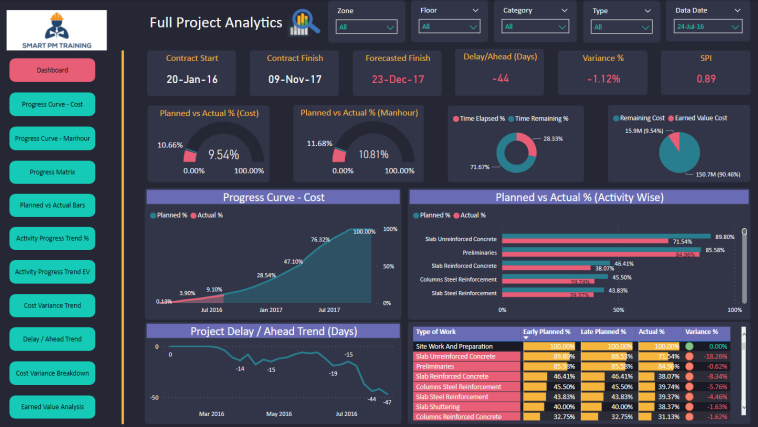

Transforming Project Controls for a Data-Driven Future
In today’s industrial construction landscape, companies face many tangled issues that make project management a challenging endeavor. As projects grow in scale and new client demands add twists and turns, the need for integrated project controls becomes more essential than ever. In this op-ed, we take a closer look at how the CCC Group has managed to upgrade its traditional methods by replacing off-putting spreadsheets and isolated systems with a unified project controls platform. The discussion highlights how such changes are not only key for boosting margins and improving visibility but also serve as an example for the broader construction industry striving to manage its way through complicated pieces of work.
Over the next several sections, we will dive in to explore the fine points of integrated project controls in industrial construction, the benefits of a data-driven approach, and how clear change management processes can help companies reach a new standard of execution. By examining CCC Group’s transformative journey, we offer insights and lessons that are especially essential for companies wrestling with the nerve-racking complexity of modern industrial projects.
Unified Project Controls: Bridging the Gap Between Field Execution and Business Insight
One of the most significant achievements of integrated project control systems is their ability to connect the on-site activities with the boardroom strategies seamlessly. Traditional construction management often relied on fragmented tools—disconnected spreadsheets, varied data logs, and multiple siloed systems—which left companies struggling to figure a path through the maze of data. Such an approach could sometimes result in confusing bits in forecasting, where the fine details of cost and operational performance were lost amid the chaos.
CCC Group’s recent initiative is a prime example of how reconnecting the execution process with overall business insight can help overcome these nerve-racking challenges. By adopting an integrated project control system, the company has created a holistic view of project performance. Every dollar spent and every minute recorded on site now contributes to a larger narrative of efficiency and value. This elevated level of transparency ensures that both executives and field teams work in tandem, aligning day-to-day tasks with long-term business strategies.
Some of the standout benefits include:
- Seamless integration that erases confusing bits between systems
- Enhanced real-time data visibility and forecasting accuracy
- A unified platform that improves frontline decision-making
- Greater alignment between operational execution and strategic planning
With these advantages, companies can now sidestep the overwhelming, often intimidating challenge of making sense of disjointed data, and instead focus on clearly mapping out long-term growth strategies.
Reforming Outdated Tools: From Fragmented Spreadsheets to a Unified System
For years, many industrial contractors have relied on a patchwork of disconnected systems to manage their projects. These traditional methods, which include an overreliance on spreadsheets and legacy software, can be as daunting as they are inefficient. With multiple data entry points and disparate systems, the little details often slip through the cracks, causing margin variances and unpredictable outcomes.
CCC Group’s experience with InEight software serves as a case study on how transformative it can be to trade in these outdated systems. Their new approach replaces a maze of spreadsheets with one comprehensive solution that ties together every aspect of project controls. The change is not just about technology—it also reflects a cultural shift towards embracing modern practices designed to address the tangled issues of project forecasting and cost management.
Key improvements observed by companies like CCC Group include:
- Simplified Data Management: A single, unified system reduces overlapping functions and clarifies the data’s story.
- Improved Accuracy: Real-time updates help to mitigate the nerve-racking uncertainties often associated with forecasting.
- Cultural Transformation: Shifting from isolated data points to an integrated system encourages a more proactive, business-aware field culture.
Shifting away from traditional methods not only enhances operational efficiency but also changes the way teams figure a path through large-scale projects. The success of CCC Group illustrates how companies that get into an integrated project controls approach can set new industry benchmarks, manage the tricky parts of legacy data, and foster a work environment where practical execution meets strategic oversight.
Enhancing Forecast Accuracy: The Role of Data-Driven Strategies in Construction
One of the most significant benefits of integrated project controls is the improvement in forecasting accuracy. In large-scale industrial projects, the little twists in cost estimation and schedule planning can ripple into significant budget overruns and delays. For companies juggling several hundred million dollars in projects, even a small margin variance can be off-putting and have far-reaching consequences.
By leveraging systems that offer real-time, data-driven insights, CCC Group has been able to reduce these unexpected issues. Their journey underscores an essential lesson: consistent planning and the ability to monitor small, yet critical, financial and operational shifts are super important for ensuring sustainable success. Instead of relying on guesswork or legacy systems filled with confusing bits, the company now has a beacon of transparency that brings every involved party into the loop.
This data-powered forecasting system brings with it several key advantages:
- Real-Time Updates: Project managers can see changes as they happen, reducing the possibility of surprises later on.
- Consistent Planning: Standardized planning procedures ensure that every project follows tried and tested steps, minimizing margin variance.
- Enhanced Client Trust: With more reliable forecasts, stakeholders can feel confident in the reported figures and improved margins.
The commitment to a unified forecasting system demonstrates how companies can get around the overwhelming task of managing scattered data. For many, this shift not only improves cost control but also builds a foundation for long-term growth and industry leadership.
Integrating Change Management: Strengthening Client Trust and Project Execution
Change management is one of those essential parts of project controls that many companies tend to overlook until faced with nerve-racking challenges. The integrated project control system at CCC Group does more than just unify data—it also brings together a structured approach to change management, ensuring that every alteration is documented, tracked, and analyzed in a consistent manner.
This methodical approach to change is invaluable when handling interventions during the project lifecycle. It creates a log of adjustments that not only aids in reducing margin variance but also builds trust among clients. When every twist and turn is recorded and communicated clearly, it leaves little room for misunderstanding and fosters a cooperative environment between contractors and clients.
Consider these benefits of integrated change management:
- Transparent Documentation: Detailed records of changes help in understanding the impact of each decision on the overall project.
- Improved Change Order Capture: Systematic documentation ensures that every client-driven change is accounted for.
- Enhanced Credibility: A clear audit trail builds confidence with stakeholders and reduces potential disputes.
By embedding change management into their daily workflows, companies like CCC Group tend to not only meet but exceed client expectations. This cohesive strategy demonstrates that while the little details might often seem trivial individually, their aggregate effect can be the difference between a smooth project execution and a tense, full-of-problems process.
Boosting Operational Visibility: The Power of Data-Backed Decision Making
The integration of a comprehensive project controls software is a game-changer when it comes to giving executives and on-site managers a clear look at every step of the process. Traditional methods, which rely on piecemeal pieces of data, rarely provide the sort of unified picture that modern managers need to figure a path quickly and decisively. Instead, they often leave decision-makers with hidden complexities amid a barrage of unconnected figures.
With InEight, CCC Group has demonstrated the importance of harnessing unified, data-backed insights to improve margins and elevate project performance. What makes this approach particularly valuable is its ability to transform raw data into actionable insights, thereby paving the way to strategic decision-making that is both deliberate and agile.
A few ways integrated systems boost operational transparency include:
- Consolidated Dashboards: A single point of reference that displays crucial project metrics in real time.
- Actionable Data Points: Each data set is aligned with broader business objectives, enabling quick assessment and strategy adjustment.
- Cross-Functional Collaboration: Unified data fosters a culture where different teams work together to streamline operational goals, leading to better forecasting accuracy and improved cost management.
This organized, straightforward approach makes decision-making less intimidating and more collaborative. It eliminates the need to figure a path through endless arrays of spreadsheets, letting teams focus on generating value from reliable, real-time insights.
Standardizing Processes Across Diverse Projects
One of the recurring challenges in the construction industry is the difficulty of replicating success across different project types and geographical locations. The operational challenges that manifest in one setting might be completely foreign to another, making it hard to establish standardized practices. However, CCC Group’s experience clearly indicates that with the right integrated software, standardized processes can be scaled across diverse projects regardless of their location or client-specific requirements.
Standardization brings with it a host of advantages—ranging from improved planning to easier transfer of best practices across projects. In the case of CCC Group, the integrated system has allowed them to tackle off-putting issues like cumbersome spreadsheets and unpredictable margin variances by creating a scalable and repeatable process that fits a variety of projects.
Key benefits of standardized processes include:
- Consistency in Planning: Every project adheres to a common methodology, ensuring similar success rates regardless of project type.
- Ease in Training: New teams find it easier to get up to speed when standardized practices are in place, reducing the nerve-racking learning curve.
- Better Quality Control: Uniform procedures facilitate smoother audits and reviews, ensuring that every project meets a high standard of execution.
Such a standardized approach does not only lower risks; it also provides a springboard for innovation by removing the overwhelming uncertainty present in legacy systems. The result is a more agile and proactive organization ready to tackle both routine projects and unexpected challenges alike.
Overcoming the Overwhelming Challenges in Industrial Construction
The modern construction environment is rife with intimidating challenges. From thin profit margins to client demands that leave little margin for error, the pressure is on for companies to adapt and stay ahead. One of the knight-in-shining-armor solutions lies in technology that untangles the many competing demands of cost management, schedule control, and client communication.
For CCC Group, taking the initiative to implement integrated project controls was a strategic move to counteract these nerve-racking conditions. Their investment in InEight software was not merely about adopting a new tool—it was about shifting the culture of their organization towards one where data and transparency reign supreme.
The decision highlights several critical facets of modern industrial construction:
- Adapting to Change: Embracing new technology in a traditionally manual industry is a bold step that reflects a forward-thinking mindset.
- Leveraging Technology for Visibility: Real-time tracking and data consolidation provide a clear view of projects even when the operational environment is full of problems.
- Creating a Culture of Accountability: A unified system holds every team member accountable for their role, thereby streamlining the execution process.
This case study acts as a beacon for companies looking to overcome the twists and turns of industrial construction. It showcases that by integrating modern technology into daily processes, even the most intimidating challenges can be addressed with a clear strategy and unwavering focus on transparency and data-driven insights.
The Impact on Client Trust and Satisfaction
In an industry where projects are often on edge due to hidden complexities and unpredictable outcomes, maintaining client trust is absolutely critical. Traditional project management methods have frequently left clients with a murky view of progress, resulting in nerve-racking surprises. With integrated project controls, companies can now establish a more collaborative and transparent relationship with their clients.
For example, the introduction of unified dashboards and real-time updates provides clients with clear snapshots of project status at any given moment. This increased transparency not only reduces misunderstandings but also builds confidence as clients witness firsthand the small distinctions in project performance and cost forecasting.
Highlights of how integrated systems enhance client trust include:
- Improved Communication: Regular updates and a consolidated view of project progress make it easier to keep clients in the loop.
- Higher Transparency: Clients gain access to data-backed insights that reassure them that every change is documented and reasoned.
- Predictable Outcomes: Standardized forecasting reduces the risk of unexpected costs, increasing overall client satisfaction.
When clients feel secure in the project’s direction, they are more inclined to engage in long-term partnerships. The CCC Group’s use of InEight stands as a clear example: by eliminating the intimidating aspects of managing disjointed systems, they have effectively turned potential points of tension into avenues for strengthened relationships.
Lessons for Small and Industrial Contractors Alike
While CCC Group is a large industrial services contractor, the lessons from their journey resonate with firms of all sizes. For small business owners and mid-sized industrial contractors, the move to an integrated project controls system offers a road map for scaling operations efficiently and reducing costly margin variances.
Key takeaways for companies across the board include:
- Unified Systems Over Fragmented Tools: The use of a single platform can significantly reduce the overwhelming challenge of tracking progress and costs using scattered data.
- Data-Backed Decision Making: By relying on real-time insights, companies can make critical decisions that steer projects away from risky pitfalls.
- Standardization Across Projects: Establishing repeatable and scalable processes helps in managing the tricky parts of diverse project types regardless of business size.
- Cultural Transformation: Embracing modern technology is not just a technical upgrade, but a shift in work culture that binds frontline execution with strategic business goals.
These lessons underscore the importance of having a unified vision for managing projects. Whether you’re an emerging small business or a long-established industrial contractor, integrated project controls are a must-have component for managing your way through today’s complex economic and business environment.
Implementing a Culture That Embraces Modernization
Modernizing operational processes is not a task that can be accomplished overnight. It requires a deep understanding of the challenges at hand as well as the nerve-racking issues that come with dismantling long-standing traditional methods. However, the case of CCC Group teaches us that when teams are encouraged to connect the dots between the confusing bits on the shop floor and the critical data in the boardroom, the benefits can be substantial.
Building a business-aware field culture starts with leadership that invests in technology and training. It involves ensuring that every team member, from site supervisors to executive managers, is well-equipped to figure a path through new, integrated systems. This cultural shift is often initiated by demonstrating how each individual’s contribution—no matter how small the twist in their daily work—plays a key role in the larger picture.
Essential strategies to foster a technology-forward culture include:
- Comprehensive Training Programs: Equip teams with the skills necessary to adapt to new systems swiftly and effectively.
- Leadership Buy-In: When management champions modernization, it paves the way for widespread adoption and reduces the intimidating barriers to change.
- Ongoing Support and Feedback: Continuous feedback loops help refine processes and ensure that technology is not seen as a top-down imposition, but rather as a collaborative tool for improvement.
This cultural transformation is not without its challenges, as changing traditional habits is always full of problems. But by making incremental adjustments and celebrating small victories, companies can gradually work their way towards a fully integrated and modernized operation that truly works in favor of both productivity and profitability.
Expert Insights: The Intersection of Technology and Traditional Construction Practices
One of the most interesting facets of this technological upgrade is how it harmoniously blends with long-standing traditional practices in construction. For decades, the construction world thrived on hands-on experience and on-site intuition. However, as projects grow more intricate, even seasoned professionals find themselves facing overwhelming technical twists and turns in data management.
Industry experts agree that the integration of modern project controls transforms this dynamic rather than replacing the human element in construction. Instead of negating the value of hands-on experience, data-backed tools empower experienced professionals to make better-informed decisions on the fly. In effect, they provide a safety net that allows for calculated risks, smoother project delivery, and an overall boost in operational efficiency.
Key expert insights include:
- Synergistic Integration: Technology and traditional know-how can coexist, each reinforcing the other to manage the confusing bits that occur at every project stage.
- Empowered Decision Making: With improved data visibility, seasoned professionals can steer through even the most intimidating project parts with greater assurance.
- Rapid Adaptation: As the industry evolves, those who adapt by embracing modern controls find themselves better positioned to negotiate the little twists in an ever-changing market landscape.
By integrating traditional construction expertise with innovative project controls, companies tap into a powerful synergy. This ensures that every decision is backed by both on-the-ground experience and reliable, real-time data—a combination that is proving to be a winning formula in today’s competitive market.
The Road Ahead: Embracing a Future of Transparency and Efficiency
Looking forward, the evolution of project controls appears destined to redefine how industrial projects are managed. The success of CCC Group, as seen in their streamlined operations on multi-hundred-million-dollar projects, offers a proven blueprint for others in the field. As more companies adopt integrated project controls, the industry can expect to see broader improvements in cost forecasting, operational transparency, and client trust. This shift represents a move away from isolating spreadsheets and fragmented systems into an era where unified data systems allow managers to make precise decisions without getting lost in the maze of tangled issues.
What may have once seemed like nerve-racking odds against efficient performance is gradually being replaced by an era defined by clarity, efficiency, and enhanced collaboration. For those still wrestling with outdated methods and off-putting forecasting techniques, the CCC Group’s story sends a clear message: adopting modern technology is not just a nice-to-have, but a super important strategic necessity.
Through the lens of integrated project controls, we see a path forward for industrial construction—a future where every spiral of cost tracking and every minor fluctuation in execution is underpinned by dependable, real-time data. This data-driven approach is transforming the way industry leaders approach everything from day-to-day operations to long-term strategic planning, ensuring that companies can build, innovate, and thrive even amid the twists and turns of today’s economic challenges.
Summary of Key Benefits of Integrated Project Controls
| Benefit | Description |
|---|---|
| Unified Data Systems | Eliminate the nerve-racking confusion of multiple spreadsheets with one integrated solution that improves overall transparency. |
| Improved Forecasting | Real-time data insight ensures consistent planning, reducing margin variances and building stakeholder trust. |
| Enhanced Change Management | Structured documentation of every project modification builds a transparent audit trail and improves client confidence. |
| Standardized Processes | Scalable tools ensure that diverse projects, regardless of geography, follow established best practices that drive efficiency. |
| Culture Transformation | Bridging the gap between field operations and executive strategies fosters a work environment driven by data and accountability. |
Conclusion: Setting a New Standard for Operational Excellence
The journey of CCC Group from disjointed spreadsheets to an integrated, data-backed solution underlines the transformative potential of modern project controls. In an industry beset by tangled issues and intimidating challenges, making the switch to a unified system is not only a practical decision but a strategic imperative. By connecting the dots between everyday field execution and overarching business goals, companies can simplify the complex pieces of project management and boost both client trust and profitability.
This transformation is more than a technological upgrade; it represents a cultural shift that encourages every stakeholder, from on-site workers to top executives, to get into a more collaborative and transparent work environment. As the construction industry continues to evolve, those who embrace such integrated systems stand in the best position to steer through unpredictable challenges and set new benchmarks for efficiency and operational excellence.
In reflecting on CCC Group’s success, it is clear that integrated project controls are a blueprint for the future. They provide a clear path forward—a way for companies to figure a path amid the tricky parts, streamline operational decision-making, and confidently meet the ever-changing demands of modern industrial construction. As more organizations adopt these transformative practices, we can look forward to an industry characterized by transparency, efficiency, and sustained cost control, setting a new standard for operational excellence in the years to come.
Originally Post From https://www.enr.com/events/23153-transforming-project-controls-how-ccc-group-boosted-margins-and-visibility-with-ineight
Read more about this topic at
What is Integrated Project Controls? Key Concepts & …
Integrated project control – Resolve Project System’s …