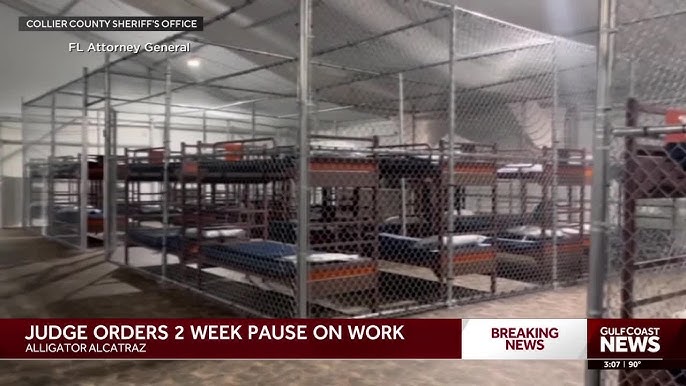

Assessing the Alligator Alcatraz Situation: A Heated Intersection of Law, Environment, and Immigration
The recent decision by a Miami federal judge to put a temporary hold on construction at the Alligator Alcatraz facility has raised a number of tricky parts regarding environmental protection, proper legal procedure, and the management of immigration detention centers. As we take a closer look at the developments, it is clear that the issue is layered, full of problems and off-putting legal twists and turns that not only impact the environment but also resonate with broader social and economic concerns.
The decision, which pauses construction activities such as lighting, paving, excavation, and fencing for 14 days, comes as attorneys argue whether the project violates a 55-year-old federal environmental law. This law mandates that federal agencies dig into how construction projects might affect the environment, identify ways to appropriately minimize that impact, and allow public comment on potential environmental degradation. The temporary restraining order, issued by U.S. District Judge Kathleen Williams, represents a move to momentarily put the brakes on what many feel is a nerve-racking race toward environmental damage and constitutional challenges.
Understanding the Background of the Alligator Alcatraz Facility
The Alligator Alcatraz detention center, built more than a month ago by the state of Florida, is now a flashpoint for critics who say it threatens environmentally sensitive wetlands. According to lawsuits filed by environmental groups and the Miccosukee Tribe, the project jeopardizes wetlands that are home to protected plants and animals—areas that have taken years to rehabilitate with billions of dollars in environmental restoration efforts. Opponents claim that the construction, if allowed to continue unchecked, may reverse years of hard work in restoring these fragile ecosystems.
There is also a civil rights group arguing that the detention center is not just environmentally risky but also a site where detainees’ rights are being compromised. They highlight that detainees are prevented from meeting lawyers, are held without formal charges, and have seen significant disruptions to their bond hearings. This multifaceted legal attack touches upon both environmental and constitutional issues, making it a case that sits at the crossroads of human rights and environmental law.
Legal Hurdles and the Judge’s Temporary Order
The courtroom drama unfolded as attorneys for federal and state agencies maintained that the lawsuit was challenged in the wrong jurisdiction. They argued that since the detention center is located in Collier County—despite being built on an airstrip owned by Miami-Dade County—the case should have been filed in Florida’s middle district. Judge Williams, however, chose not to immediately accept that argument, instead focusing on the pressing need to review whether the project has violated long-standing environmental procedures.
This legal tussle showcases the bizarre jurisdictional issues that sometimes arise in environmental cases in the United States. Attorneys are tasked with sorting out the fine points of jurisdiction, environmental law, and human rights law simultaneously, often facing confusing bits that require a clear roadmap to figure a path forward. In this case, the temporary restraining order stops any further construction until regulations are thoroughly followed, thereby affording a brief period for environmental groups, the Miccosukee Tribe, and other concerned parties to present their evidence.
This pause is essential because it prevents irreversible damage to sensitive ecosystems while legal teams dive in and review the potential breaches of environmental laws. From another angle, the ruling also sends a signal to public authorities: no project, regardless of its political or social objective, should bypass procedural rules that are in place to safeguard both our natural resources and the rights of individuals impacted by such initiatives.
Environmental Concerns: Protecting Sensitive Wetlands
One of the core issues at stake is the well-being of wetlands—fragile ecosystems that serve as natural habitats for several protected species. Environmental groups and the Miccosukee Tribe have argued that in the rush to construct the Alligator Alcatraz facility, state and federal authorities may have neglected the need to assess the environmental impact fully. Their concerns hinge on the fact that even small changes in the environment can set off a series of chain reactions that threaten biodiversity.
A quick breakdown of the environmental concerns includes:
- Potential destruction of native flora and fauna habitats.
- Disruption of water quality in the wetland ecosystems.
- Possible long-term ecological imbalances that could reverse extensive restoration efforts.
This case teaches us a critical lesson—if we are to move forward with projects that dramatically alter our landscapes, we must do so only after ensuring that every tiny detail or hidden complexity in the environmental regulations is respected. The temporary restraining order is a step toward ensuring that the intricate pieces of environmental law are not merely overlooked or dismissed for expediency.
Moreover, dedicating the time to figure a path forward with full environmental oversight can prevent future crises that might otherwise force local communities into a situation full of problems. Whether it is a halt on construction or a redesign of the detention center’s features, preserving our environmental resources should be a non-negotiable aspect of any infrastructure project, particularly when fragile wetlands are involved.
The Human Side of the Debate: Detainee Rights and Community Impact
While environmental concerns take center stage in this dispute, the question of detainee rights is equally pressing. Civil rights organizations have expressed unease over the conditions in which detainees are being held. Reports of detainees being kept without proper legal access, of bond hearings being canceled, and the dragging legal process all add layers of tension to an already explosive situation.
For many critics, the detention center stands as a stark example of a system that sidesteps due process. The temporary restraining order, however, does not affect the current detainees or those who may be incoming. This apparent separation of the construction process from the treatment of individuals in custody highlights one of the many tangled issues in the debate: how to balance the enforcement of immigration policies while still protecting the rights of those detained.
It is crucial that a facility intended for detaining individuals not lead to a scenario where legal and human rights are sacrificed for administrative convenience. A fair and just approach would involve periodic reviews of detention practices, ensuring that those who are held receive the legal support they need. Doing so is not only a matter of humanitarian concern but also an essential aspect of maintaining public trust in the immigration and legal systems.
Analyzing Jurisdictional Challenges in Environmental Litigation
Another twist in this case comes from jurisdictional disputes. Attorneys representing government agencies argued that the lawsuit should have been filed in a different district, given the physical location of the detention center. Although this argument remains unresolved, it highlights an uncomfortable reality about our legal system—the messy overlap between jurisdictional boundaries and environmental protection protocols.
Consider the following table that outlines the main jurisdictional points in question:
| Jurisdiction | Claimed Importance | Issues Raised |
|---|---|---|
| Miami-Dade County | Property Ownership | Despite being owned by Miami-Dade, the location nuance complicates the case due to its placement near Collier County. |
| Florida’s Southern District | Location of Legal Filing | Authorities argue that filing in this district is inappropriate when the physical location is in the neighboring district. |
| Florida’s Middle District | Proper Venue | Critics suggest this would be a more suitable venue, reflecting the actual location of the detention site. |
These jurisdictional debates introduce a set of confusing bits that legal professionals must work through. They point to a bigger problem in the way lengthy and tangled legal frameworks sometimes hinder efficient action. Meanwhile, the delay in resolving these legal disputes only postpones necessary environmental reviews and broader legal reforms that have been long awaited.
Political and Economic Ramifications of Immigration Detention Centers
The decision to construct a detention center like Alligator Alcatraz is inherently political. Beyond legal and environmental implications, it sends a message about how immigration policies are administered in the state of Florida. The timing of this project, coupled with plans to build a second immigration detention center at a Florida National Guard training center in north Florida, appears to be loaded with political intent.
One of the central arguments from critics is that the rushed construction of such facilities could result in severe economic and environmental consequences, particularly if proper procedures are not followed. From a business standpoint, investments in infrastructure must consider all the little twists of regulatory compliance. The failure to do so can lead to significant financial repercussions and a negative impact on local economies in terms of both environmental rehabilitation and community morale.
Several factors contribute to these economic and political repercussions:
- Investment Risks: Hastily approved projects may lead to long-term financial liabilities if they fail to comply with environmental regulations.
- Environmental Rehabilitation Costs: If the wetlands suffer from irreversible damage, the cost of restoration could far exceed the budget allocated for construction.
- Community Trust: Local communities may lose trust in government actions that prioritize expedience over transparency and thorough review.
Given these points, it is super important that regulators consider each step carefully. Any shortcut in the process can result in a runaway decline in public confidence and potentially stoke future social and environmental debates.
Examining the Role of Environmental Law in Regulating Construction Projects
The Alligator Alcatraz case offers a window into just how critical it is to adhere to established environmental protocols. Under the 55-year-old federal environmental law that governs such projects, federal and state agencies are obligated to assess how construction activities might affect local ecosystems. The law is designed to ensure that large-scale projects do not cause unintended and lasting harm – a rule that appears to have been overseen in this instance, according to environmental groups and the Miccosukee Tribe.
Key points that illustrate the importance of environmental law include:
- Review Requirements: Agencies should carefully review all construction plans to identify potential impacts on the surrounding environment.
- Public Involvement: The law mandates that the public be allowed to provide input on projects, ensuring that local concerns are heard from the start.
- Mitigation Strategies: When a project poses potential risks, agencies are required to propose ways to minimize environmental harm.
When these fine points are sidelined, the consequences can be severe. Not only is the natural environment at risk, but the legal precedents for environmental protection may also be undermined. The restraining order in this case serves as a reminder that federal environmental laws must play a super important role in guiding projects that hold the potential to impact large areas of natural heritage.
Ultimately, following these procedures strictly means that any future projects are less likely to face abrupt legal halts or, worse, irreversible environmental damage. It is up to policymakers, agencies, and the public to insist on these measures before any major developments are green-lighted.
Balancing Immigrant Detention, Human Rights, and Public Safety
While much of the debate centers on environmental and legal challenges, the human rights aspects of the Alligator Alcatraz case deserve a closer look as well. Immigration policies are inherently tangled issues, full of complicated pieces that must be managed with a delicate balance between public safety and individual rights. For instance, detainees currently housed or scheduled to be housed at the facility say that their basic legal rights, such as access to attorneys and timely bond hearings, are being undermined. This situation is nerve-racking not only for the individuals involved but also for advocates who argue that due process should not be sidelined in the rush to enforce immigration law.
Here are some of the main concerns on the human rights front:
- Legal Representation: Reports indicate that detainees are being restricted from communicating with legal counsel, a core component of ensuring fair treatment.
- Detention Conditions: There are claims that detainees are being held without any formal charges and that their conditions are less than ideal.
- Court Proceedings: The cancellation of bond hearings adds another layer of tension, as timely judicial review is essential for safeguarding rights in detention cases.
Given these issues, it becomes crucial to take a step back and figure a path that protects the rights of people while balancing the demands of national law enforcement. Policy decisions in this arena should be informed not only by the need for security but also by the fine shades of fairness that every individual deserves. In many ways, the outcomes of this case could have far-reaching implications for how immigration detention centers operate in the future.
Economic Implications and Opportunities for Policy Reform
The current debate over Alligator Alcatraz is also an opportunity to reflect on the broader economic landscape shaped by immigration detention centers. In an era where small businesses and major industrial players alike face significant regulatory challenges, the fallout from such contentious projects offers a cautionary tale. Projects that do not follow established guidelines can lead to expensive delays, legal resource allocation, and ultimately, a loss of public trust in government planning.
There is an undeniable economic ripple effect when a project like this is caught in legal limbo. Business leaders and local investors are now forced to recalibrate their strategies according to these nerve-racking legal and environmental hurdles. Here are some key factors from an economic perspective:
- Investment Uncertainty: The temporary halt on construction creates a climate of uncertainty that could delay future investments in the region.
- Regulatory Scrutiny: Enhanced regulatory reviews may result in higher compliance costs for future projects, impacting the bottom line of businesses involved.
- Local Economic Impact: Reversals in environmental restoration could necessitate substantial funding for future rehabilitation projects, diverting resources from other economic priorities.
Investors and policymakers must work together to establish guidelines that protect both the natural environment and the economic interests of the local community. There is a clear need to streamline environmental reviews without compromising on the protections that have been put in place over decades. By doing so, communities can avoid the pitfalls of hasty developments that lead to legal and financial backlashes.
Charting a Path Forward: Policy Recommendations and Best Practices
The Alligator Alcatraz case, with its multi-faceted challenges, presents an opportunity to rethink how construction projects—especially those connected to immigration enforcement—should be managed in the future. Here are several policy recommendations and best practices that could help steer through these tangled issues:
- Enhance Environmental Review Processes: Federal and state agencies must ensure that environmental reviews consider every tiny detail of ecological impact. This means engaging independent experts to identify potential issues and suggesting measures to mitigate environmental damage before any construction begins.
- Improve Public Transparency: Public comment periods should be extended and promoted widely, ensuring that community voices are heard. Transparent communication is key to building trust between government authorities and the public.
- Jurisdiction Clarity: Legal frameworks should be reviewed and updated to avoid jurisdictional confusion. Clear guidelines on where such lawsuits should be filed will prevent legal battles from stalling construction unnecessarily.
- Protect Detainee Rights: It is essential that any detention facility operates with full adherence to constitutional safeguards. This includes guaranteeing detainee access to legal counsel and timely judicial review of their situations.
- Economic Impact Assessments: Prior to project approval, a thorough analysis of potential economic impacts on local communities should be conducted. Mitigation measures—if environmental setbacks occur—should form a part of the project plan to protect local investment and economic stability.
Adopting these recommendations could create a more balanced approach that respects both environmental concerns and national security interests. It is key that regulatory bodies adapt and refine their procedures to ensure that development does not come at the expense of the natural world or the rights of individuals.
Broader Reflections on the American Legal and Environmental Landscape
The situation at Alligator Alcatraz is not an isolated example in the American landscape of legal disputes. Rather, it is a window into the long-standing challenges that arise when rapid infrastructure projects run headlong into established environmental laws and human rights protections. What makes this case particularly loaded with issues is its timing and the emerging political narrative that surrounds immigration-related policies.
In pushing through projects that carry significant environmental and social implications without the requisite procedural precautions, authorities risk wider disruption. For instance, disregarding environmental laws can lead to a domino effect where future projects may be subjected to increasingly strict scrutiny, causing delays and heightened public debate. This atmosphere of tension, driven by nerve-racking legal challenges, may discourage investors and complicate the processes of economic development.
From a legal perspective, the tricky parts of this case underscore the need for judicial bodies to strike a measured balance between enforcing regulations and allowing projects—their underlying goals notwithstanding—to proceed in a timely manner. A flexible yet firm hand is required to address both the public interest and the demands of environmental protection.
Moreover, the evolving narrative around immigration detention centers invites us to scrutinize how humanitarian considerations are weighed against state policies. It calls for a broader societal conversation about whether the pace of progress in infrastructure development has outstripped our ability to ensure fairness, transparency, and adherence to important safety protocols.
Community Repercussions and the Role of Local Organizations
Local communities, particularly those in South Florida, are keenly observing the Alligator Alcatraz developments. Community leaders and local organizations have expressed a mix of concern and cautious optimism about the future. On one hand, there is worry about potential environmental degradation and the long-term impacts on local ecosystems. On the other, there is an opportunity for these groups to push for better engagement with policymakers.
Community involvement is a key component in managing projects that hold significant public interest. Local organizations have the ability to voice the concerns of the residents, ensuring that economic advancements do not come at an unacceptable cost to the environment or civil rights. The following points summarize the community’s expectations:
- Active Participation in Public Hearings: Residents should be given ample chance to participate in public comment periods.
- Monitoring Environmental Impact: Local groups and independent experts should be empowered to oversee environmental assessments, ensuring compliance with established guidelines.
- Advocacy for Detainee Rights: Civil rights advocates need to be part of discussions on detention center policies to safeguard legal and humane treatment of detainees.
This collaborative approach would assist in finding a balance that supports both community interests and broader national objectives. By engaging local voices, regulatory agencies can tap into on-the-ground realities that might otherwise be overlooked in high-level policy discussions.
Learning from the Present: Implications for Future Projects
The Alligator Alcatraz case is a vivid illustration of what happens when we push forward with projects in an environment loaded with legal twist and turns without duly recognizing the subtle parts of environmental and legal requirements. Looking ahead, there are several lessons that policymakers and project planners can take away from this episode:
- Do Not Rush Processes: Adequate time must be invested in ensuring that every legal and environmental step is observed. Cutting corners may lead to costly litigation or irreversible damage.
- Interdisciplinary Coordination: Environmental studies, legal assessments, and community consultations should work in tandem. Coordination among experts from different fields can help prevent overlooked issues that later lead to major public disputes.
- Continuous Oversight: Even after a project has been approved, continuous monitoring is key. Regulatory agencies must remain vigilant and responsive to any emerging environmental or legal concerns throughout a project’s duration.
- Public Accountability: Transparency in decision-making processes builds trust. Posting regular updates on project progress, decisions made, and challenges faced can help demystify complex issues for the general public.
These lessons are a call to action for better governance when it comes to large-scale construction projects. By reflecting on the present challenges and striving to find ways to make regulations more efficient and transparent, we can hope to see future projects that are not only successful in their immediate goals but also sustainable in the long term.
The Intersection of Business Interests and Regulatory Compliance
Businesses and investors looking at projects like Alligator Alcatraz cannot ignore the potential economic impacts of legal delays and regulatory battles. In today’s ever-evolving economic landscape, companies—whether in construction, manufacturing, or even those indirectly involved in real estate and local development—need to be aware of the implications that such cases hold. When regulatory frameworks are robust and well-followed, the outcomes are generally more predictable, ensuring that business risks are kept to a minimum.
In the case of Alligator Alcatraz, the temporary restraining order sends a clear message to the business community: expect thorough scrutiny from environmental and legal standpoints before committing significant resources to a project. This cautionary approach, albeit nerve-racking in the short term, provides a long-term benefit by protecting both the environment and public investments.
A number of strategies can help businesses prepare for similar situations:
- Conduct Comprehensive Risk Assessments: Before engaging in new projects, companies should undertake detailed studies to identify any potential legal or environmental pitfalls. This will help in budgeting time and resources appropriately.
- Engage in Stakeholder Dialogue: Building relationships with local communities, regulatory agencies, and environmental groups can provide valuable insights into potential obstacles that might not be immediately apparent.
- Establish Contingency Plans: In the event of legal challenges or regulatory pauses, having backup plans can help lessen the economic impact on a business’s operations.
- Advocate for Streamlined Processes: Businesses can lobby for policy reforms that balance rapid economic development with robust regulatory compliance, ensuring that future projects face fewer unexpected delays.
These strategies may serve as a roadmap for companies navigating projects in sectors where government regulations and environmental issues converge in complicated pieces. Ultimately, a well-informed approach can lead to a more resilient business environment that is both competitive and environmentally responsible.
Reflecting on the Broader Societal Implications
Stepping back from the immediate details of the Alligator Alcatraz case, one must ask: what does this mean for society at large? The interplay between environmental protection, legal accountability, and immigration policy is a reflection of the broader challenges facing our country today. As the polarizing issues of immigration and environmental conservation remain hotly debated topics, cases like this force us to reckon with the underlying tensions in our public policy approaches.
The societal implications can be broken down into several key areas:
- Governance and Transparency: The need for clear, transparent, and accountable decision-making processes has never been more evident. Public confidence in governmental institutions depends on their ability to manage complex projects without sacrificing ethical or environmental standards.
- Balancing Priorities: There is a critical need to balance security and humanitarian rights. The Alligator Alcatraz case places a spotlight on how difficult it can be to ensure both are achieved without one overwhelming the other.
- Investment in Sustainable Projects: The case underscores the importance of investing in infrastructure that is both economically viable and environmentally sustainable. This will ensure that developments do not come at an unacceptably high cost to our natural ecosystems.
- Civic Engagement: Empowering local communities to participate in the decision-making process creates a more resilient society. It encourages public advocacy and ensures that the voices of those most affected are heard in the corridors of power.
For citizens, understanding these dynamics is crucial. It is a reminder that progress in any sector must be managed carefully—with an eye on both immediate benefits and long-term consequences. Engaging in these public discussions equips society with the ability to ask the right questions and demand accountability from those in positions of power.
Concluding Thoughts: A Call for Balanced Development
As we navigate through the nerve-racking legal battles, environmental debates, and human rights concerns presented by the Alligator Alcatraz case, a central theme emerges—a call for balanced development. This case is emblematic of the challenges that arise when critical projects intersect with regulatory requirements and societal values.
On one hand, the environmental issues are clear: the wetlands are fragile, the habitat for protected species is at risk, and decades of restoration could be undone by hasty construction. On the other hand, the legal and human rights aspects remind us that the protection of individual liberties is just as essential to our society as the preservation of nature. Together, these issues demand that policymakers, legal experts, and community stakeholders work together to sort out these tangled issues with foresight and determination.
Looking forward, it is super important that all parties involved commit to a process that is transparent, open to public participation, and grounded in both environmental science and human rights law. A measured plan that factors in the economic, environmental, and social costs—and that is responsive to community input—will be the best path forward for projects like Alligator Alcatraz, and for future developments that similarly straddle the lines of public policy.
In the end, the Alligator Alcatraz situation is more than just a legal challenge or a temporary holdup in construction. It is a microcosm of larger national debates on immigration, environmental stewardship, and the role of government in ensuring that development is managed responsibly. With the stakes this high, it is essential for every stakeholder—from local citizens to federal regulators—to take an active role in shaping an outcome that respects the delicate balance between progress and preservation.
As we continue to watch this story unfold, the lessons learned here will likely influence not only future construction projects but also the broader dialogue on how America should chart its path in a world that is both rapidly changing and deeply rooted in environmental and constitutional principles.
Ultimately, the temporary restraining order may be seen as a pause—a moment to catch our breath, evaluate the fine points of environmental law, and ensure that in our rush to create new forms of infrastructure, we do not trample on the very foundations of our community values and ecological sustainability. It is a reminder that even in the face of intimidating challenges, the need for balanced, thoughtful development remains a super important objective for our society.
Originally Post From https://www.cbsnews.com/miami/news/alligator-alcatraz-temporarily-restraining-order-environmental-lawsuit/
Read more about this topic at
‘Alligator Alcatraz:’ Judge orders temporary halt to …
Judge orders temporary halt to construction at Florida’s ‘ …