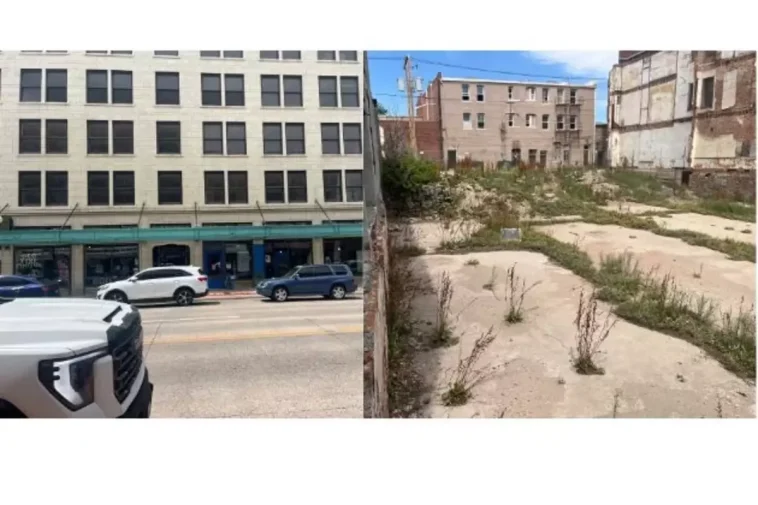

Understanding Cheyenne’s Bold Economic Initiative
The recent decision by Cheyenne’s city leaders to establish a $3.5 million revolving loan fund marks an essential milestone in addressing the city’s lingering issues with vacant and underdeveloped properties. As an opinion piece, this article takes a closer look at this initiative, its potential impacts on the local economy, and the lessons it holds for communities grappling with similar challenges.
At its core, the plan provides a fresh approach to reinvesting in properties that have long been a sore point in Cheyenne’s development landscape. In many ways, it is an effort to breathe new life into buildings that have stood idle for too long, like the Hynds and the Hole. These sites have become symbols of the city’s tangled issues when it comes to urban development. With a focus on overcoming these intimidating obstacles, Cheyenne’s strategy embraces a vision of sustainable, community-based economic growth.
The Purpose Behind a $3.5 Million Revolving Loan Fund
One of the most critical aspects of this initiative is its design. The fund will work as a revolving loan mechanism, meaning that as successful projects repay their loans, those funds are then reinvested in future ventures. Such a structure is key to ensuring the program’s lasting vitality. By using repayments to sustain the fund, Cheyenne can create a self-renewing source of capital dedicated to bridging the final financing gap in several high-impact development projects.
City officials and community partners view this effort as an innovative method for addressing the final piece of financing that remains elusive. With the City Council and economic development nonprofit Cheyenne LEADS collaborating closely, the fund targets projects that offer the promise of increased jobs, a broader tax base, and improved housing availability. This proactive approach is seen not only as a tool for fixing immediate issues but also as a way to set the stage for long-term economic progress.
Addressing Tricky Parts of Urban Redevelopment
One glaring challenge in urban redevelopment is the tricky balance between ensuring public accountability and attracting private investment. City leaders have had to figure a path through several tough, complicated pieces of the project, such as determining the precise role of public funds in projects that are generally funded through private capital. The concern is that without clear guidelines, public money might inadvertently encourage projects that are not fully sustainable in the long run.
In this case, Cheyenne LEADS is tasked with administering the funds and ensuring the money is only used as the “last dollar in” once other investments have been secured. This method not only secures the public investment but also prompts developers to exhaust all other financing options before turning to the city-backed fund. By doing so, the city tackles one of the more confusing bits of public-private partnerships: ensuring that support from the government only fills a critical gap rather than subsidizing an entire project.
How Cheyenne LEADS Manages Fiscal Challenges
Cheyenne LEADS brings valuable experience from past projects, including the Cheyenne Business Parkway, to the table. This organization now serves as the fiscal agent and program administrator, a role critically trusted to uphold standards of transparency and accountability. Their experience steers the program through the twists and turns of administering public funds while ensuring these funds deliver a palpable benefit to the community.
The organization’s oversight is seen as key in maintaining taxpayer accountability. In meetings, councilors highlighted that LEADS’s role would mean that public funding is subjected to thorough oversight measures, ensuring that every dollar is strategically applied to projects with material community benefits. This step is essential not just for financial prudence but also for building confidence among local stakeholders who might be wary of government funds being misused.
Building Foundations: How Public Funding Supports Reinvestment
Public funding, when used correctly, can serve as a super important catalyst for urban redevelopment. Cheyenne’s revolving loan fund is built to spur immediate projects while paving the way for long-term benefits. By earmarking funds from the voter-approved 6th Penny Sales and Use Tax, the city underscores its commitment to leveraging every available resource to stimulate development.
Bridging Final Financing Gaps in Development Projects
A common barrier for many development projects is securing the final dose of financing, especially when traditional banks or private investors view the venture as too risky. Cheyenne’s approach is to provide funds that serve as the “last dollar in,” plugging that final missing piece of the funding puzzle. Once a project secures its other sources of capital, the city’s funds then help complete the financial picture.
This innovative model encourages private investors to first commit their own resources, thereby decreasing the overall risk associated with the project. It also ensures that the initiative is not seen simply as a bailout for troubled investments, but as a crucial finishing touch in a larger strategic plan.
Strengthening the Local Tax Base and Creating Jobs
The broader goals of the revolving loan fund extend well beyond the immediate benefit to a few projects. By turning long-vacant sites into hubs of activity, the city stands to enjoy a ripple effect in terms of economic benefits. Here are some of the key domains impacted:
- Job Creation: Revitalized developments often lead to an influx of businesses and services, which in turn drive up local employment.
- Increased Revenue: A larger tax base can result from more vibrant local commerce, enabling the city to reinvest in community services.
- Community Renewal: Transforming abandoned or underutilized spaces can uplift entire neighborhoods, leading to improved quality of life for residents.
Each of these outcomes contributes to a more robust and resilient local economy. While some may worry about the potential pitfalls of using public funds, the structure of a revolving loan fund assures that successful projects help seed new opportunities down the line, making the model sustainable.
Lessons for Small Business Owners and Investors: Public-Private Partnerships
This approach offers valuable insights for small business owners and investors who are watching public projects closely. When a city commits to bridging the final financing gap, it sends a clear signal that local government is willing to work alongside the private sector to foster growth. This pragmatic collaboration also opens doors for future partnerships with other municipalities facing similar development challenges.
What This Means for Cheyenne’s Business Community
For local small businesses, the promise of revitalized properties means more opportunities to expand, hire additional staff, and participate in a growing community economy. Business owners can expect increased customer foot traffic, enhanced commercial zones, and generally improved neighborhood environments where they can thrive.
A thriving commercial ecosystem also helps to stimulate a diverse market, where new ventures complement existing enterprises. This domino effect is especially important in sectors like automotive, industrial manufacturing, and even the emerging electric vehicle market, where local industry developments might require new infrastructure investments provided by the city’s renewed focus on redevelopment.
Ensuring Accountability: Oversight and Financial Controls
Despite the optimistic forecasts, some observers remain concerned about the possible tangled issues that can arise from mixing public funds with private investments. To mitigate these challenges, several oversight measures have been embedded in the program’s design. For instance, any project request for the loan must come with a demonstrated material public benefit and a minimum 20% equity contribution from private entities. In addition, acceptable collateral must be provided to secure the loan.
Cheyenne’s city leaders, along with Cheyenne LEADS, have emphasized that these rigorous conditions are established to ensure that taxpayer money is well-protected. This has been well-received by some council members, who noted that rigorous oversight is indispensable in preventing wasteful spending and ensuring that every dollar yields a favorable community impact.
Navigating Public Policy and Real Estate Challenges
When dealing with the kinds of tricky parts that law and real estate present, it is important to have a transparent process that all stakeholders can trust. Cheyenne’s new initiative shows how layered decisions and multiple layers of oversight can help steer through the nerve-racking bits of urban development that are often encountered when public policy intersects with real estate.
Balancing Public Funds With Private Investment
One of the critical points is ensuring that the public funding at hand does not crowd out private investment. Instead, its role should be to encourage additional funds to come forth and complete projects considered too intimidating for private investment alone. City leaders have structured the program so that it acts as a final financial stop-gap, meaning that most of the development risk is still assumed by those who invest privately.
This ensures that public money is only used in particularly nerve-racking circumstances – when a project has already garnered significant private backing but still lacks a crucial finishing touch. The overall result is a high-impact model that prevents the entire project from relying entirely on taxpayer dollars. The collaboration between public policy and private enterprise here stands as an example of smart, community-focused governance.
The Role of Local Government and Community Involvement
Recent discussions among Cheyenne City Council members—Michelle Aldrich, Ken Esquibel, and Jeff White—highlighted the importance of local government involvement in such projects. Their active participation, along with various referenda and consent agendas, underscores a commitment to addressing the city’s long-standing issues without losing sight of community input.
Notably, council members have recognized that their role goes beyond just voting on fund allocations. They must also manage your way through the small distinctions of developing projects that might bring unintended complications. For example, one councilor recused himself from a vote due to potential conflicts of interest, emphasizing a transparent approach to governance that other municipalities can learn from.
Strategies for Managing Your Path Through Tangled Real Estate Developments
With multiple projects on the horizon, Cheyenne’s initiative serves as a case study in managing your path through complex and sometimes tricky real estate developments. The city’s decision to simultaneously address other municipal needs—ranging from public transportation applications to the procurement of necessary equipment—reflects a comprehensive effort to overhaul its development blueprint.
Practical Tools for Overcoming Development’s Hidden Complexities
To better understand how Cheyenne’s initiatives function, it’s useful to analyze the variety of projects included in the city council’s consent agenda. These projects, ranging from vehicle procurement for emergency services to the demolition and reconstruction of aging structures, illustrate the broad spectrum of issues city leaders are tackling.
The following table breaks down some of the key items approved during the recent meeting:
| Project | Approved Budget | Description |
|---|---|---|
| High Plains Arboretum Greenhouse | $154,243 | Professional services for design and construction overseen by TDSi – The Design Studio Inc. |
| Ice Slicer Building Redevelopment | $627,700 | Demolition and new steel structure provided by Construction Specialists Inc. |
| Vehicle Procurement | Combined Total of ~$419,290 | Bids from Ken Garff Cheyenne and Fremont Motor Co. for mid-size trucks and SUVs for city departments. |
| Miscellaneous Licenses & Agreements | N/A | Transfer of liquor license and fence installation agreements for designated city properties. |
This breakdown not only highlights the municipality’s comprehensive approach but also illustrates how public funds observe layered approval processes. By having multiple projects integrated into the same consent agenda, local government demonstrates that every project, whether large or small, fits into a broader strategy to revitalize and enhance community living areas.
Strategies for Working Through Mixed Funding Scenarios
When assessing developments that rely on a combination of public and private funds, it is helpful to keep several key strategies in mind:
- Prioritize Projects With High Community Impact: Projects should directly benefit the community, whether through job creation, enhanced public services, or improved infrastructure.
- Establish Clear Metrics: There must be measurable criteria to assess the success of each project, ensuring that funds are reinvested wisely.
- Ensure Rigorous Oversight: Bodies managing the funds, like Cheyenne LEADS, should maintain transparency and hold developers accountable for meeting agreed-upon benchmarks.
- Encourage Private Investment: By requiring a minimum 20% equity from private partners, the program makes sure that public funds are only stepping in to complete projects that have other investor backing.
These strategies help figure a path through the many hurdles that tend to come along with complex redevelopment projects. They serve as a reminder that thorough oversight and a clear vision for project success are indispensable in turning a good idea into a sustainable reality.
Looking Ahead: Sustainability and the Future of Economic Development
The innovative approach taken by Cheyenne holds promise not only for the city but also for other municipalities that are wrestling with similar growth challenges. By combining a revolving loan fund with strict oversight and a commitment to public accountability, Cheyenne is setting a pattern that could be scaled and adapted elsewhere.
Long-Term Benefits of a Revolving Loan Fund
The true potential of a revolving loan fund lies in its cyclic, self-sustaining nature. Once initial projects start to repay their loans, these repayments can be funneled back into the fund, fueling further redevelopment and job creation. This cyclical process creates a lasting impact far beyond the immediate benefit of a single project.
In a broader sense, such a system encourages developers to take on projects that might otherwise seem too overwhelming without a safety net. It offers a secure, manageable way to work through the nerve-racking parts of urban development, turning individual successes into a collective momentum that propels the local economy forward. This cycle not only stabilizes funding flows but also helps to enhance the overall quality of life for residents as more properties convert from vacant eyesores to vibrant community spaces.
Scaling the Model Across Communities
The Cheyenne model, while local in its application, provides useful lessons for policy makers and community leaders across the nation. Municipalities facing similar hurdles in urban redevelopment can take a closer look at how a revolving loan fund can be structured to address both immediate funding gaps and long-term sustainability challenges. Factors to consider include:
- Integration of Voter-Approved Taxes: In Cheyenne, funds from the 6th Penny Sales and Use Tax have been the bedrock of this initiative. Cities considering similar models must explore committed revenue streams to support long-term initiatives.
- Local Economic Development Partnerships: Strong partnerships between local government, non-profit organizations, and private investors are essential for balancing public accountability with the need for investment in high-impact projects.
- Clear Conditions for Funding Use: The strategy of offering funds as the “last dollar in” guarantees that public funds only bridge crucial gaps, ensuring that developers are equally invested in the project’s success.
This model highlights that the key to managing your way through the muted twists of urban redevelopment lies in designing programs that are both flexible and sufficiently detailed. The Cheyenne initiative shows that with the right combination of community involvement, strict oversight, and adaptive funding strategies, public money can serve not only to support the interim stages of development but also to foster an economic ecosystem that benefits all stakeholders.
Implications for a Diverse Range of Industries
The reverberations of Cheyenne’s initiatives extend beyond just traditional real estate or housing projects. Industries as diverse as small business retail, industrial manufacturing, automotive services, and even emerging fields like electric vehicles stand to gain from the resulting urban rejuvenation. A vibrant, active community creates a fertile ground for innovation and entrepreneurship.
Boosting Opportunities for Small Businesses
Small business owners and entrepreneurs should take note of the potential opportunities that come with urban redevelopment. Revitalized neighborhoods often give rise to increased consumer demand, which in turn stimulates economic activity across multiple sectors. Enhanced infrastructure, improved community spaces, and increased foot traffic can create a thriving market environment, allowing small businesses to flourish.
For many business leaders, the message here is clear: leveraging public-private partnerships can bridge critical gaps in funding that might otherwise stifle innovation and growth. By taking advantage of such initiatives, small businesses can secure improved locations, better facilities, and enhanced community support—all of which are necessary ingredients for sustainable growth.
The Ripple Effect on Industrial Manufacturing and Automotive Sectors
One cannot ignore the broader economic implications of transforming vacant developments into active hubs. Industrial manufacturing facilities benefit from upgraded infrastructure and improved logistics as communities revamp outdated or underutilized industrial spaces. The automotive industry, particularly in service and repair as well as in the forward-looking electric vehicle sector, stands to benefit from the investments made in modernizing the urban landscape.
For these sectors, urban redevelopment creates a chain reaction: better roads, updated facilities, and a growing workforce all contribute to enhanced productivity and competitiveness. As cities like Cheyenne lead the way in addressing the confusing bits of urban decay, they also pave the way for industries that are deeply intertwined with the community’s overall growth and stability.
Marketing and Economic News: Communicating Success
One often overlooked aspect of such initiatives is the role of clear communication and marketing in ensuring public buy-in. When city leaders and administrators can effectively communicate the benefits and success of programs like the revolving loan fund, they build a foundation of trust that is essential for future projects.
The Importance of Transparent Communication
Transparency in public funding and project execution is a super important component of building trust. By clearly outlining how funds are allocated, maintained, and cycled back into new projects, Cheyenne’s administration ensures that local businesses and residents alike understand where and how their tax dollars are being spent. This is pivotal when navigating the tangled issues of public policy and economic redevelopment.
Clear communication can also dispel fears that public funds might be wasted on projects with questionable returns. Through regular updates, community meetings, and detailed reports, the city can show tangible progress and direct outcomes, thus reinforcing confidence among investors and taxpayers alike.
Leveraging Economic News for Broader Impact
When economic news outlets and local journalism highlight success stories coming out of this initiative, it creates a positive feedback loop that encourages further investment and community participation. Meticulous reporting on both successes and setbacks provides a balanced view that reassures the public, ensuring that the narrative remains one of progress rather than mismanagement.
This kind of marketing isn’t just for the city’s benefit—it serves as a case in point for other regions considering similar measures. Sharing detailed outcomes, lessons learned, and future projections through economic news channels and specialized business journals solidifies the city’s reputation as a forward-thinking community that tackles its development challenges head-on.
Final Thoughts: A Cautiously Optimistic Future
The $3.5 million revolving loan fund adopted by Cheyenne city leaders represents more than just a new line item in the local budget—it symbolizes a commitment to overcoming long-standing, intimidating challenges posed by vacant and underutilized urban spaces. With the support of experienced organizations like Cheyenne LEADS, carefully laid out oversight measures, and an unwavering commitment to public benefit, this initiative sets a laudable example for other cities facing similar obstacles.
While the road ahead may still be full of problems and laden with twists and turns, the structure of a revolving loan fund offers a way to bridge final financing gaps without overwhelming the finances of local government. As the projects move forward, the success of this initiative will rely on continued transparency, strong public-private partnerships, and an unyielding focus on community impact.
For local entrepreneurs, small business owners, and industry leaders in sectors such as industrial manufacturing, automotive services, and even electric vehicles, Cheyenne’s move provides a blueprint for harnessing public funds to stimulate growth. It underscores the importance of using innovative financial structures to address those intimidating bits in urban redevelopment. By working together, the city, local businesses, and community organizations can truly reinvent the urban landscape, turning dormant projects into vibrant centers of economic activity.
In conclusion, while no single initiative can solve all the subtle parts of urban decay in one stroke, Cheyenne’s revolving loan fund is a promising step in the right direction. It is a testament to how collaborative efforts, when managed with care and an eye toward sustainable development, can ultimately transform challenges into opportunities. As we follow the unfolding story in Cheyenne, one thing remains clear: with thoughtful planning, transparent oversight, and a commitment to fostering community growth, even the most intimidating development hurdles can be turned into success stories for generations to come.
Originally Post From https://capcity.news/community/city/2025/08/12/cheyenne-oks-3-5m-loan-seed-to-tackle-vacant-building-projects/
Read more about this topic at
Vacancy-to-Vitality
Competitive Loan Financing Products